
Onion Oil Market Size
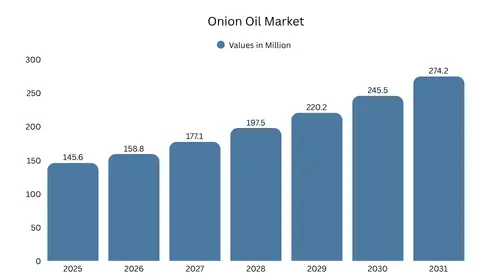
According to Zeal Market Research, the global onion oil market size was valued at USD 145.6 million in 2025 and is projected to grow from USD 158.8 million in 2026 to reach USD 274.2 million by 2031, at a CAGR of 11.5% during the forecast period (2026-2031). This growth is driven by increasing consumer preference for plant-based haircare solutions, rising awareness regarding scalp health, and growing demand for sulfur-rich natural ingredients associated with hair strengthening and follicle nourishment. The expansion of herbal beauty products, clean-label cosmetic formulations, and growing adoption of preventive haircare routines among younger consumers further support the onion oil market growth.
Key Market Insights
- Asia Pacific accounted for the leading regional share of the global onion oil market at 41.2% in 2025, supported by strong consumer acceptance of herbal haircare products and high onion production across India and China.
- By product type, the pure onion oil segment led the market in 2025 with 38.4% of global revenue, equivalent to approximately USD 55.9 million, driven by increasing demand for concentrated and chemical-free formulations.
- By formulation type, blended onion oils remained the dominant category owing to the inclusion of complementary ingredients such as castor oil, rosemary oil, black seed oil, and argan oil for enhanced scalp nourishment.
- By distribution channel, online retail is expected to witness robust expansion as beauty brands continue strengthening direct-to-consumer strategies through e-commerce platforms and social media marketing.
- The women segment is projected to record the fastest growth among end users, supported by increasing concerns regarding stress-induced hair thinning, postpartum hair fall, and scalp wellness.
What are the growth opportunities in the onion oil market?
Development of Clinical Scalp Recovery Products
The development of clinically positioned scalp recovery products targeting postpartum hair loss, stress-related hair thinning, menopausal scalp concerns, and recovery-focused hair therapies presents one of the most significant growth opportunities. Most existing products remain positioned as general herbal oils, creating opportunities for dermatologically tested onion oil solutions with specialized therapeutic claims.
Manufacturers are increasingly exploring clinically supported formulations enriched with peptides, caffeine, niacinamide, biotin, and botanical extracts to improve follicle stimulation and scalp nourishment. Products targeting medically adjacent categories such as alopecia support, chemotherapy-related hair weakening, and hormonal scalp imbalance represent an emerging premium niche with limited competition. The integration of dermatological testing, trichologist endorsements, and evidence-based marketing is expected to strengthen consumer confidence and improve premium product positioning.
Expansion of Lightweight and Leave-In Formulations
Another prominent opportunity area is the development of lightweight scalp serums, leave-in tonics, and waterless onion oil concentrates. Traditional overnight oiling routines are gradually being replaced by convenient daily-use scalp treatments preferred by urban consumers and working professionals. Encapsulated onion extracts and odor-controlled formulations are expected to gain traction in premium beauty categories.
Rapid urbanization, changing grooming habits, and increasing preference for non-greasy formulations are accelerating demand for fast-absorbing scalp care products compatible with daily styling routines. Spray-based scalp mists, roll-on scalp applicators, overnight repair ampoules, and hybrid oil-serum products are creating new product development opportunities. These formats are also helping brands expand adoption among male consumers and younger demographics that avoid traditional heavy hair oils.
Upcycled and Sustainable Ingredient Sourcing
Manufacturers are increasingly exploring sustainable sourcing opportunities by extracting antioxidant-rich compounds from onion peel waste and surplus agricultural produce. This aligns with the broader clean beauty movement and circular-economy initiatives focused on reducing agricultural waste while enhancing cosmetic ingredient value.
Onion peel extracts rich in quercetin and flavonoids are gaining importance as multifunctional cosmetic actives with antioxidant and anti-inflammatory properties. Companies investing in traceable sourcing systems, biodegradable packaging, and low-waste extraction technologies are likely to strengthen competitive differentiation in environmentally conscious consumer segments. Sustainable sourcing also creates opportunities for partnerships between cosmetic companies, agricultural processors, and ingredient manufacturers.
Microbiome-Focused Scalp Wellness Solutions
The growing focus on scalp microbiome health is creating opportunities for fermented onion oil formulations combined with postbiotics, botanical extracts, and anti-inflammatory ingredients. These products target dandruff control, scalp sensitivity, and barrier repair rather than solely positioning around hair growth.
Consumers are increasingly recognizing scalp inflammation and microbiome imbalance as major contributors to hair thinning and poor follicle health. This is encouraging brands to develop multifunctional scalp wellness products incorporating tea tree oil, fermented rice water, salicylic acid, probiotics, and soothing botanical ingredients alongside onion extracts. The category is evolving beyond traditional oiling into advanced scalp therapy systems positioned similarly to skincare treatments.
Evolution of Onion Oil into a Functional Scalp Care Category
Onion oil can therefore be defined as a specialized botanical haircare segment positioned at the intersection of traditional herbal remedies, preventive scalp wellness, and modern clean beauty formulations. The category increasingly spans mass-market herbal brands, premium dermatological haircare lines, and digitally native personal care companies.
The onion oil market is gradually transitioning from a commodity-based herbal oil segment into a performance-oriented scalp care category emphasizing scientifically supported ingredients, targeted treatment positioning, and multifunctional formulations. Growing consumer awareness regarding scalp aging, pollution-induced hair damage, and stress-related hair concerns is expected to further expand the functional scalp wellness ecosystem over the forecast period.
What are the latest trends in the onion oil market
- Fermented scalp wellness formulations: Manufacturers are increasingly introducing fermented onion oil products targeting scalp microbiome balance, inflammation reduction, and barrier repair. These formulations focus on scalp wellness rather than only hair growth positioning. Fermentation technologies are also being utilized to improve ingredient absorption, reduce irritation potential, and minimize the strong sulfur odor traditionally associated with onion-based formulations.
- Upcycled onion peel extraction: Sustainable cosmetic brands are utilizing onion peel waste and surplus agricultural onions to extract antioxidant-rich compounds such as quercetin for premium scalp care formulations. This trend supports circular manufacturing models while reducing agricultural waste and improving raw material utilization efficiency.
- Multi-oil infusion systems: Onion oil products are increasingly blended with rosemary oil, black seed oil, castor oil, tea tree oil, and argan oil to enhance scalp nourishment and reduce odor intensity. Multi-functional oil systems are becoming popular among consumers seeking comprehensive scalp hydration, dandruff management, and follicle strengthening benefits in a single product.
- Rise of preventive haircare: Younger consumers are increasingly adopting onion oil products as preventive scalp care solutions before experiencing severe hair loss or thinning conditions. Preventive wellness positioning is expanding demand among consumers in their 20s and early 30s seeking long-term scalp maintenance solutions.
- Premiumization of traditional hair oiling: Hair oiling is evolving into a wellness-oriented self-care ritual supported by aromatherapy, scalp massage therapy, and overnight repair positioning. Premium brands are incorporating spa-inspired packaging, essential oil blends, and luxury botanical ingredients to reposition hair oiling as part of holistic beauty and relaxation routines.
- Digital beauty and influencer-driven growth: Social media tutorials, dermatologist-led content, and beauty influencers are accelerating awareness regarding natural scalp therapies and onion-derived haircare products. Short-form video platforms and creator-led educational content are significantly influencing purchasing decisions, particularly among younger digital-first consumers.
- Growth of clean-label and preservative-free formulations: Consumers are increasingly demanding sulfate-free, paraben-free, silicone-free, and mineral oil-free scalp products. This is encouraging brands to develop cleaner onion oil formulations with transparent ingredient labeling and simplified botanical ingredient lists.
- Expansion of men’s scalp grooming products: Onion oil is increasingly being incorporated into beard oils, scalp tonics, and anti-thinning products targeting male grooming categories. Growing awareness regarding early-stage male hair thinning is supporting demand for convenient and non-pharmaceutical scalp care alternatives.
Segmental Insights
By Product Type
Based on product type, the onion oil industry is segmented into pure onion oil, blended onion oil, onion scalp serum, and onion shampoo oil infusions. The pure onion oil segment led the market in 2025, accounting for 38.4% of global revenue, equivalent to approximately USD 55.9 million, due to growing consumer preference for concentrated herbal formulations.
- Pure Onion Oil: Includes cold-pressed and concentrated onion oils marketed for direct scalp application. These products emphasize sulfur-rich nourishment, hair strengthening, and scalp stimulation. Strong demand is particularly visible among consumers preferring traditional herbal remedies and minimal-ingredient formulations.
- Blended Onion Oil: Comprises formulations mixed with rosemary oil, castor oil, coconut oil, black seed oil, and argan oil to improve functionality, texture, and fragrance profile. Blended products are increasingly positioned as multifunctional scalp therapy systems addressing dandruff, dryness, breakage, and scalp sensitivity simultaneously.
- Onion Scalp Serum: Includes lightweight leave-in treatments and scalp tonics designed for daily use without greasy residue. This segment is witnessing strong growth among urban consumers seeking convenient scalp care products compatible with modern grooming routines and hairstyling practices.
- Onion Shampoo Oil Infusions: Covers onion-infused cleansing products positioned as convenient alternatives to traditional overnight oiling routines. Manufacturers are increasingly combining onion extracts with keratin proteins, biotin, and caffeine to improve product differentiation.
- Onion Hair Masks and Creams: Emerging category focused on deep conditioning, scalp hydration, and intensive repair treatments. These products are gaining popularity in salon and premium personal care channels.
By Formulation Type
Based on formulation type, the global market for onion oil is segmented into conventional formulations, organic formulations, fermented formulations, and others, with blended and organic products witnessing strong adoption.
- Conventional Formulations: Dominates mass-market sales due to affordability and widespread retail availability. These products remain highly popular in price-sensitive markets and traditional retail channels.
- Organic Formulations: Growing rapidly among premium consumers seeking chemical-free and clean-label beauty products. Certified organic ingredients and sustainable sourcing claims are becoming important purchase differentiators.
- Fermented Formulations: Emerging category focused on scalp microbiome support, improved absorption, and reduced irritation. Fermented scalp care products are increasingly positioned as advanced wellness solutions rather than conventional herbal oils.
- Others: Includes waterless concentrates, encapsulated onion extracts, peptide-based scalp formulations, and hybrid oil-serum systems targeting high-performance scalp therapy applications.
- Ayurvedic and Herbal Formulations: Strongly preferred in South Asian markets, where traditional herbal medicine systems continue influencing consumer haircare purchasing behavior.
By Distribution Channel
Based on distribution channel, the market is segmented into online retail, supermarkets & hypermarkets, specialty beauty stores, and others, with online retail emerging as the fastest-growing segment.
- Online Retail: Driven by direct-to-consumer brands, social commerce platforms, influencer marketing, and personalized product recommendations. Subscription-based scalp care programs and targeted digital advertising are accelerating online sales growth.
- Supermarkets & Hypermarkets: Continue to hold a strong share due to broad product visibility and accessibility across urban and semi-urban markets. Established FMCG brands benefit significantly from shelf visibility and impulse purchases in this channel.
- Specialty Beauty Stores: Cater to premium herbal beauty and salon-focused product categories. These outlets increasingly emphasize ingredient transparency and personalized scalp care consultations.
- Others: Includes pharmacies, local cosmetic retailers, salon-based sales channels, and wellness stores focused on herbal and natural personal care products.
- Direct-to-Consumer Platforms: Rapidly expanding through brand-owned websites and mobile commerce applications offering subscription services, loyalty programs, and customized scalp wellness recommendations.
By End Use
Based on end use, the market is segmented into men, women, and unisex, with the women segment recording the fastest growth rate.
- Men: Increasingly adopting onion oil products for beard growth support, scalp nourishment, and early-stage hair thinning prevention. Demand for convenient scalp sprays and beard-focused formulations is expanding within male grooming categories.
- Women: The fastest-growing segment driven by rising awareness regarding postpartum hair fall, stress-related shedding, and holistic scalp wellness. Women consumers also show higher engagement with premium scalp therapy systems and multi-step haircare routines.
- Unisex: Includes family-oriented and gender-neutral haircare products positioned around natural wellness and preventive care. Minimalist packaging and universal ingredient positioning are supporting growth in this segment.
- Professional Salon Use: Emerging segment where onion-derived scalp oils and serums are incorporated into scalp detoxification, hair spa, and follicle-strengthening treatments offered by salons and wellness centers.
| By Product Type | By Formulation Type | By Distribution Channel | By End Use |
|---|---|---|---|
|
|
|
|
Regional Insights
Asia Pacific
Asia Pacific accounted for 41.2% of the global onion oil market share in 2025, making it the largest regional market.
- India dominates due to strong consumer preference for Ayurvedic and herbal haircare solutions along with high onion production availability. The country also benefits from the strong presence of domestic herbal beauty brands and rapidly expanding e-commerce penetration.
- China is witnessing growing demand for botanical scalp wellness products and premium clean beauty formulations. Younger consumers are increasingly adopting preventive haircare products influenced by social media beauty trends.
- Japan and South Korea are supporting innovation in lightweight scalp serums and advanced cosmetic formulations. Premium scalp wellness products with minimalist textures and multifunctional ingredients are particularly popular in these markets.
- Southeast Asian countries, including Indonesia, Thailand, and Vietnam, are emerging as high-growth markets supported by increasing disposable income, urbanization, and growing beauty consciousness.
- The region also benefits from strong cultural acceptance of traditional hair oiling practices, supporting higher long-term product adoption rates compared to Western markets.
North America
North America onion oil industry was valued at USD 38.5 million in 2025 and is expected to grow steadily through 2031.
- The United States leads regional demand due to increasing adoption of clean-label beauty products and preventive haircare routines. Consumers are increasingly shifting toward botanical alternatives to synthetic scalp treatments.
- Demand is driven by social media influence, dermatologist-backed natural products, and premium scalp wellness trends. Digital beauty communities are playing a major role in educating consumers regarding herbal scalp therapies.
- Canada is witnessing increasing demand for sustainable and cruelty-free botanical haircare products. Environmentally conscious consumers are favoring vegan and ethically sourced personal care formulations.
- Growth in multicultural consumer demographics is also contributing to higher demand for traditional herbal haircare products within mainstream retail channels.
- Premium scalp wellness clinics and salon partnerships are creating additional opportunities for professional-grade onion scalp therapy products.
Europe
Europe represents a steadily expanding market supported by premium herbal beauty demand.
- Countries such as Germany, the UK, and France are witnessing growing interest in plant-based cosmetic formulations. Consumers increasingly prioritize ingredient transparency and clinically inspired beauty products.
- Sustainability, ingredient transparency, and organic certifications are major purchasing factors in the region. Eco-friendly packaging and cruelty-free claims are becoming important competitive differentiators.
- Premium scalp wellness categories are gaining traction among younger consumers focused on preventive beauty solutions. Demand for lightweight and non-greasy formulations is particularly strong.
- European consumers are increasingly favoring minimalist ingredient lists and preservative-free scalp care formulations aligned with clean beauty preferences.
- Specialty organic retailers and pharmacy chains are becoming important distribution channels for premium onion oil products across the region.
LATAM
Latin America and the Middle East are emerging as high-potential markets.
- Brazil and Mexico are witnessing increasing adoption of natural haircare oils due to strong beauty-conscious consumer bases. Demand is particularly high for anti-frizz, scalp nourishment, and hair-strengthening products.
- In the Middle East, rising demand for herbal personal care products and premium grooming solutions is supporting market expansion. Traditional beauty rituals and strong haircare spending are contributing to product adoption.
- Rapid expansion of beauty-focused e-commerce platforms is improving product accessibility across emerging urban markets.
- Local influencers and regional beauty creators are increasingly promoting botanical scalp care routines, supporting awareness regarding onion-derived haircare products.
Onion Oil Market Share
- The top 5 players collectively accounted for approximately 48% of global onion oil sales in 2025, reflecting a moderately fragmented market structure with strong regional brand presence.
- Large herbal beauty companies leverage strong distribution networks, digital marketing capabilities, and product diversification strategies to maintain a competitive advantage.
- Direct-to-consumer channels are enabling emerging brands to capture higher margins and build stronger customer engagement through influencer-led campaigns.
- Niche brands are increasingly differentiating through organic certifications, microbiome-focused formulations, and sustainable ingredient sourcing.
Leading Companies in the Onion Oil Market
- WOW Skin Science
- Mamaearth
- +
- Dabur India Ltd.
- Khadi Natural
- Biotique
- Indulekha
- Soulflower
- Nature’s Absolutes
- Oriental Botanics
- Ustraa
- Pilgrim
- StBotanica
- Arata
- WishCare
Recent Developments in the Onion Oil Industry:
- November 2025: O&3 published insights highlighting rapid growth in onion-derived haircare ingredients, citing increased demand for onion oil in shampoos, scalp serums, and lightweight hair treatments. The company emphasized cold-pressed onion seed oil formulations focused on scalp health, reduced breakage, and improved absorption.
Frequently Asked Questions
How big is the global onion oil market?
According to industry analysis, the global onion oil market was valued at USD 145.6 million in 2025 and is projected to increase from USD 158.8 million in 2026 to reach USD 274.2 million by 2031, registering a CAGR of 11.5% during the forecast period (2026-2031).
What is driving growth in the global market?
Growth is being driven by increasing demand for herbal haircare products, rising awareness regarding scalp wellness, growing adoption of preventive haircare routines, expansion of clean-label beauty products, and increasing preference for plant-based scalp therapy solutions.
Which products are most popular in the global market?
Popular products include pure onion oils, blended onion scalp oils, onion scalp serums, onion-infused shampoos, leave-in scalp tonics, beard oils, and lightweight follicle-strengthening treatments.
Which regions are leading the global market?
Asia Pacific leads the market due to strong consumer preference for Ayurvedic and herbal beauty products, while North America and Europe are witnessing steady growth supported by clean beauty trends and preventive scalp wellness adoption.
Who are the leading players in the onion oil market?
Leading companies operating in the onion oil market include WOW Skin Science, Mamaearth, Himalaya Wellness, Dabur India Ltd., Khadi Natural, Biotique, Indulekha, Soulflower, and Oriental Botanics.
Why is onion oil becoming popular in scalp wellness products?
Onion oil is gaining popularity due to its sulfur-rich composition, association with hair strengthening benefits, increasing consumer preference for natural ingredients, and growing demand for preventive scalp care products targeting hair thinning and scalp nourishment.
What are the major trends shaping the market for onion oil?
Key trends include fermented scalp wellness formulations, microbiome-focused haircare products, upcycled onion peel extraction, lightweight leave-in scalp serums, premiumization of traditional hair oiling, and influencer-driven herbal beauty marketing.