
Horseback Riding Clothes Market Size
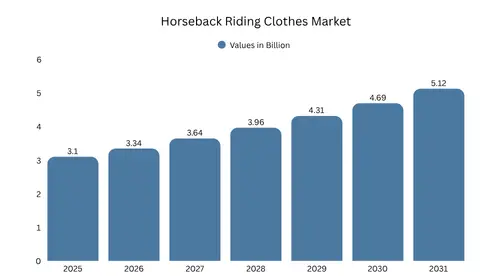
According to Zeal Market Research, the global horseback riding clothes market size was valued at USD 3.1 billion in 2025 and is projected to grow from USD 3.34 billion in 2026 to reach USD 5.12 billion by 2031, registering a CAGR of 8.9% during the forecast period (2026-2031). This growth is driven by increasing participation in recreational horseback riding, expanding equestrian tourism activities, and rising demand for performance-oriented riding apparel that enhances rider comfort, flexibility, and safety. The horseback riding clothes market growth is further supported by technological advancements in breathable fabrics, rising adoption of protective riding gear, and growing consumer preference for premium equestrian apparel across both professional and leisure riding segments.
Key Market Insights
- North America accounted for the leading regional share of the global horseback riding clothes market at 37.2% in 2025, supported by strong equestrian participation, high premium apparel spending, and a well-established horse sports industry.
- By product type, the tops segment led the market in 2025 with 34.8% of global revenue, equivalent to approximately USD 1.0 billion, driven by high demand for riding shirts, competition tops, and thermal base layers.
- By material type, polyester blends remained the dominant category owing to their durability, moisture management capability, stretch performance, and resistance to abrasion during riding activities.
- By distribution channel, online retail is expected to witness strong expansion as equestrian brands increasingly strengthen direct-to-consumer sales through e-commerce platforms and digital marketing strategies.
- The women segment is projected to record the fastest growth among end users, supported by rising female participation in recreational riding, dressage, endurance riding, and equestrian tourism activities.
What are the growth opportunities in the horseback riding clothes market?
Expansion of Recreational Riding and Equestrian Tourism
One of the most prominent growth opportunities lies in the expansion of horseback riding tourism and recreational equestrian activities. Agritourism destinations, luxury ranch resorts, guided trail riding operators, and countryside tourism experiences associated with the horseback trekking tourism industry are witnessing growing popularity globally. This is creating demand for versatile riding apparel that combines outdoor functionality, rider comfort, and lifestyle aesthetics suitable for leisure riders and tourism participants.
The rising popularity of destination-based equestrian experiences is also increasing demand for beginner-friendly riding apparel with simplified sizing, lightweight construction, and multi-purpose functionality. Consumers participating in short-term riding activities increasingly prefer clothing that can transition between riding, outdoor recreation, and casual travel environments. This is encouraging brands to expand collections targeting tourism riders, ranch visitors, and outdoor adventure consumers rather than focusing solely on professional equestrian athletes.
In addition, the expansion of equestrian schools, riding clubs, and youth riding programs is creating recurring demand for entry-level riding apparel and training-focused product lines. Rental facilities and guided tour operators are also increasingly sourcing standardized riding apparel and protective garments for visitors, creating additional institutional sales opportunities for manufacturers.
Development of Climate-Adaptive Riding Apparel
Another major opportunity area is the development of climate-responsive equestrian clothing designed for varying weather conditions and prolonged riding sessions. Manufacturers are increasingly investing in UV-protective textiles, ventilated riding panels, thermal-regulation fabrics, and moisture-balancing technologies that improve rider comfort across endurance riding, outdoor competitions, and trail activities. Rising concerns regarding rider heat stress during competitions are expected to further accelerate innovation in lightweight and breathable riding garments.
Climate-adaptive apparel is becoming increasingly important as horseback riding activities often involve extended outdoor exposure across changing environmental conditions. Riders participating in endurance competitions, trail riding, ranch work, and equestrian tourism increasingly require apparel capable of maintaining thermal stability while reducing sweat accumulation and friction discomfort during prolonged saddle contact.
Manufacturers are also exploring modular layering systems that allow riders to adapt clothing performance according to seasonal conditions. Detachable thermal liners, weather-resistant outer shells, windproof riding jackets, and hybrid ventilation fabrics are gaining traction among consumers seeking year-round riding apparel solutions. Demand for lightweight fabrics with odor-control and antibacterial properties is also increasing due to longer riding durations and travel-based equestrian activities.
Integration of Safety-Compatible Apparel Systems
Growing adoption of inflatable safety vests and body protection equipment is creating opportunities for riding apparel engineered specifically for compatibility with rider safety systems. Manufacturers are increasingly focusing on flexible seam construction, stretch expansion zones, and ergonomic garment architecture that supports airbag deployment while maintaining rider mobility and professional appearance. This trend is particularly relevant in eventing, cross-country riding, and endurance disciplines.
Safety-oriented product development is becoming a key competitive differentiator as riders increasingly prioritize injury prevention and compliance with evolving equestrian safety standards. Riding jackets, base layers, and competition apparel are increasingly designed to reduce restriction around shoulder movement, spine alignment, and torso flexibility while accommodating protective equipment underneath.
The integration of impact-resistant textile zones, reinforced abrasion panels, and strategically positioned padding systems is also expanding within premium riding apparel categories. Manufacturers focusing on rider biomechanics and fall-protection compatibility are expected to gain stronger positioning among competitive riders, equestrian academies, and professional training organizations.
Sustainable and Repair-Oriented Product Development
Sustainability-driven product development is emerging as a long-term growth opportunity in the horseback riding clothes market. Consumers increasingly prefer durable apparel manufactured using recycled fibers, low-impact dyeing techniques, and environmentally responsible production systems. In addition, repair-focused product models such as replaceable grip panels, modular thermal liners, and refurbishment services are gaining traction among equestrian consumers who prioritize product longevity and reduced waste generation.
Unlike fast-fashion activewear categories, equestrian consumers typically prioritize durability, product lifespan, and long-term usability, creating favorable conditions for circular apparel business models. Brands are increasingly investing in high-strength stitching, abrasion-resistant fabrics, and repair-friendly garment construction to extend product usability across intensive riding conditions.
Opportunities are also emerging in recyclable packaging, traceable sourcing systems, and sustainable performance textiles developed specifically for equestrian applications. Consumers in premium equestrian markets are increasingly willing to pay higher prices for riding apparel offering sustainability certifications, ethical sourcing transparency, and environmentally responsible manufacturing practices.
Evolution of a Specialized Performance Apparel Category
Horseback riding clothes can therefore be defined as a specialized segment of performance apparel designed to support rider safety, mobility, thermal comfort, and discipline-specific functionality. The market operates at the intersection of sportswear engineering, outdoor apparel innovation, and premium lifestyle fashion, spanning mass-market brands, luxury equestrian labels, and specialized riding apparel manufacturers.
The increasing professionalization of equestrian sports and rising consumer expectations regarding technical apparel performance are accelerating the transition from traditional riding garments toward highly engineered performance products. Riders increasingly evaluate apparel based on compression support, fabric durability, saddle grip optimization, and climate-management capabilities rather than purely aesthetic considerations.
The category is also evolving through growing integration with outdoor recreation, luxury tourism, wellness lifestyles, and premium sportswear markets. This is enabling equestrian apparel brands to expand beyond traditional horse-riding audiences and target consumers seeking outdoor-oriented lifestyle products with technical functionality and premium design positioning.
Horseback Riding Clothes Industry Trends
- Rise of airbag-compatible riding apparel: Riding apparel manufacturers are increasingly developing garments engineered to integrate with inflatable safety vests and protective riding systems. Flexible seam architecture and stretch expansion panels are becoming important design considerations. Competition jackets and riding tops are increasingly designed to maintain professional aesthetics while supporting rapid airbag deployment and unrestricted rider mobility.
- Climate-adaptive textile innovation: Brands are adopting lightweight, breathable, and UV-resistant fabrics designed specifically for long-duration outdoor riding and changing weather conditions. Ventilation zones and thermoregulation technologies are gaining popularity. Manufacturers are also introducing moisture-balancing fabrics and antibacterial textile treatments to improve rider comfort during extended outdoor riding activities.
- Athleisure influence in equestrian wear: Horseback riding apparel is increasingly incorporating lifestyle-oriented aesthetics that enable consumers to transition between riding environments and casual outdoor settings. Neutral tones, tailored fits, and versatile silhouettes are driving demand. Premium equestrian brands are increasingly blending fashion-focused design with technical riding functionality to attract younger and lifestyle-oriented consumers.
- Female-focused product engineering: Rising female participation in equestrian activities is leading to expanded product lines featuring ergonomic tailoring, adaptive waist structures, compression support systems, and inclusive sizing strategies. Manufacturers are increasingly developing discipline-specific apparel optimized for female riders participating in dressage, endurance riding, and recreational equestrian tourism.
- Sustainability integration: Apparel brands are increasingly adopting recycled synthetic fibers, environmentally responsible dyeing technologies, and durable manufacturing approaches to align with growing consumer focus on sustainability and long-term product usability. Repair-oriented product strategies and recyclable packaging solutions are also becoming increasingly important within premium equestrian apparel categories.
- Growth of premium equestrian lifestyle branding: Premium equestrian brands are increasingly positioning horseback riding apparel as luxury outdoor lifestyle products through digital storytelling, rider ambassador programs, and limited-edition collections. Luxury equestrian aesthetics are increasingly influencing apparel design, retail presentation, and brand collaborations across both riding and outdoor recreation markets.
- Expansion of technical riding leggings and hybrid apparel: Riding tights and hybrid leggings are rapidly gaining popularity due to their lightweight construction, stretch flexibility, and comfort advantages compared to traditional breeches. These products are particularly popular among recreational riders, younger consumers, and equestrian fitness participants seeking greater mobility and all-day wearability.
- Digital-first consumer engagement strategies: Equestrian apparel brands are increasingly relying on social media marketing, rider influencers, online riding communities, and direct-to-consumer platforms to strengthen customer engagement. Personalized online shopping experiences and rider-focused digital content are becoming important tools for customer retention and premium brand positioning.
Segmental Insights
By Product Type
Based on product type, the horseback riding clothes industry is segmented into tops, bottoms, outerwear, and accessories. The tops segment led the market in 2025, accounting for 34.8% of global revenue, equivalent to approximately USD 1.0 billion, due to strong demand for riding shirts, thermal base layers, and competition tops.
- Tops: Includes riding shirts, competition tops, polo shirts, thermal layers, and compression base garments. These products emphasize breathability, moisture management, and unrestricted upper-body movement during riding activities. Increasing demand for UV-resistant fabrics, quick-drying materials, and lightweight compression technologies is supporting innovation within this segment.
- Bottoms: Comprises breeches, riding tights, jodhpurs, and compression riding pants designed for flexibility, saddle grip, and abrasion resistance. Reinforced knee patches and silicone grip systems are key product features. Demand for hybrid riding leggings and stretch-focused apparel is increasing rapidly among recreational and endurance riders.
- Outerwear: Includes riding jackets, waterproof coats, insulated vests, and softshell apparel used for outdoor riding and seasonal weather protection. This segment is influenced by both performance functionality and lifestyle fashion trends. Windproof construction, lightweight insulation, and water-resistant technologies are becoming increasingly important product differentiators.
- Accessories: Covers riding gloves, socks, belts, caps, scarves, and other complementary riding products. Although smaller in market share, this segment supports brand extension and customer retention strategies. Premium accessories are increasingly positioned as high-margin products within luxury equestrian collections.
By Material Type
Based on material type, the global market share is segmented into polyester blends, nylon, cotton blends, and others, with synthetic materials dominating due to their superior durability and riding performance characteristics.
- Polyester blends: The leading segment due to excellent moisture-wicking capability, stretch performance, durability, and cost efficiency across both premium and mid-range product categories. Polyester blends are widely used in riding tops, breeches, and thermal base layers because of their ability to withstand intensive riding conditions and repeated washing cycles.
- Nylon: Offers high elasticity, strength, and abrasion resistance, making it suitable for premium breeches, compression garments, and competition wear. Its lightweight structure and flexibility make it particularly valuable for high-performance riding apparel requiring advanced movement support.
- Cotton blends: Preferred for comfort and softness in casual riding and leisure equestrian apparel. However, lower moisture management capability limits usage in intensive riding conditions. Cotton blends remain popular in lifestyle-oriented equestrian clothing and beginner riding apparel segments.
- Others: Includes advanced textiles such as elastane-rich fabrics, bamboo fibers, merino wool blends, and recycled performance materials increasingly adopted for sustainability and comfort benefits. Manufacturers are also exploring odor-control textiles and antibacterial fabric technologies for long-duration riding applications.
By Distribution Channel
Based on distribution channel, the market is segmented into online retail, specialty equestrian stores, brand outlets, and others, with online retail emerging as the fastest-growing segment.
- Online retail: Driven by brand-owned websites, equestrian marketplaces, and social commerce platforms. Influencer partnerships, rider ambassador programs, and direct engagement strategies are supporting sales growth. Virtual fitting tools, customer reviews, and personalized product recommendations are improving online conversion rates.
- Specialty equestrian stores: Provide expert fitting guidance and curated product selections catering to professional riders, riding schools, and equestrian enthusiasts seeking technical riding apparel. These stores remain important for premium product positioning and consumer trust building.
- Brand outlets: Offer premium brand experiences, exclusive product collections, and customer loyalty programs supporting high-end market positioning. Flagship stores are increasingly being used to strengthen luxury equestrian branding and direct customer engagement.
- Others: Includes department stores, sporting goods retailers, and riding club-based retail channels serving localized demand and impulse purchases. Riding academies and equestrian event venues are also emerging as important niche retail points for riding apparel brands.
By End Use
Based on end use, the market is segmented into men, women, and unisex, with the women segment recording the fastest growth rate.
- Men: Continues to hold a significant share due to strong participation in ranch riding, endurance riding, polo, and recreational equestrian activities. Demand is particularly strong for durable riding pants, weather-resistant outerwear, and competition-focused apparel.
- Women: The fastest-growing segment, driven by increasing female participation in dressage, show jumping, recreational riding, and equestrian tourism activities. Manufacturers are increasingly developing female-specific riding apparel featuring ergonomic support systems, adaptive sizing, and compression-enhancing fabrics.
- Unisex: Includes versatile designs widely used across accessories, casual equestrian wear, and beginner riding apparel categories. This segment benefits from growing demand for simplified sizing systems and multifunctional riding products suitable for broader consumer groups.
| By Product Type | By Material Type | By Distribution Channel | By End Use |
|---|---|---|---|
|
|
|
|
Regional Insights
North America
North America accounted for 37.2% of the global horseback riding clothes market share in 2025, making it the largest regional market.
- The United States dominates due to strong equestrian participation, high consumer spending on premium riding apparel, and a well-established horse sports industry.
- Demand is supported by expanding recreational horseback riding tourism, endurance riding events, and increasing adoption of technologically advanced riding apparel.
- The region benefits from strong presence of equestrian clubs, riding schools, rodeo activities, and professional horse competitions supporting consistent apparel demand.
- Canada shows stable growth driven by outdoor recreation trends, ranch tourism, and rising participation in equestrian leisure activities.
- Premium riding apparel adoption is particularly strong among consumers participating in show jumping, dressage, and eventing disciplines.
Europe
Europe market for horseback riding clothes was valued at USD 0.8 billion in 2025 and is expected to grow steadily through 2031.
- Countries such as the UK, Germany, France, and the Netherlands maintain strong equestrian traditions and high demand for premium riding apparel.
- Sustainability, product durability, and ethical sourcing practices are becoming major purchasing factors across European markets.
- Dressage, show jumping, and eventing activities continue to support demand for technically advanced competition apparel.
- European consumers increasingly prefer premium equestrian brands emphasizing craftsmanship, tailored fitting, and high-performance textile engineering.
- Growth of luxury equestrian tourism and countryside riding experiences is further strengthening demand for lifestyle-oriented riding apparel.
Asia Pacific
The Asia Pacific region is among the fastest-growing markets globally.
- China, Australia, and Japan are key growth markets supported by rising equestrian club development and increasing interest in horseback riding tourism.
- Growing middle-class spending, premium lifestyle adoption, and expanding recreational sports participation are supporting market growth.
- International equestrian events and luxury ranch tourism are further strengthening demand for specialized riding apparel.
- Australia maintains strong demand due to ranch culture, endurance riding activities, and established equestrian sports participation.
- Increasing social media influence and rising popularity of outdoor luxury recreation are encouraging younger consumers to adopt equestrian lifestyle products.
LATAM
Latin America and the Middle East are emerging as high-potential markets.
- Brazil, Argentina, and Mexico are witnessing rising demand supported by ranch culture, equestrian tourism, and recreational riding activities.
- Traditional horseback riding practices and growing outdoor tourism industries are supporting demand for durable riding apparel across Latin American markets.
- In the Middle East, investments in equestrian infrastructure, horse racing events, and luxury riding experiences are supporting market expansion.
- Premium equestrian apparel demand is increasing among affluent consumers participating in horse racing, endurance competitions, and private riding clubs.
- Government investments in sports tourism and equestrian event hosting are expected to create long-term growth opportunities across the region.
Horseback Riding Clothes Market Share
- The top 5 players: Ariat International, Kerrits, Pikeur, Horze, and Cavallo collectively accounted for approximately 49% of global horseback riding clothes sales in 2025, reflecting a moderately fragmented market structure.
- Large equestrian apparel brands leverage premium product positioning, advanced textile innovation, and strong distribution partnerships to maintain competitive advantage.
- Direct-to-consumer channels are enabling brands to improve customer engagement, strengthen rider communities, and capture higher profit margins.
- Niche equestrian brands are gaining traction through discipline-specific product development, sustainability-focused apparel, and ergonomic riding wear innovation.
Top Companies in the Horseback Riding Clothes Market
Few of the prominent players operating in the horseback riding clothes market include:
- Ariat International
- Kerrits
- Pikeur
- Horze
- Cavallo
- Equiline
- HKM Sports Equipment
- Kingsland Equestrian
- PS of Sweden
- Mountain Horse
- Tredstep Ireland
- LeMieux
- Dublin Clothing
- Samshield
- Romfh Equestrian Apparel
Horseback Riding Clothes Market News
-
- In March 2026, US Equestrian and Ariat International launched the new Ariat Team Collection, introducing updated official team apparel and equestrian gear collections for competitive riders and fans.
Frequently Asked Questions
How big is the global horseback riding clothes market?
According to Zeal Market Research, the global horseback riding clothes market was valued at USD 3.1 billion in 2025 and is projected to increase from USD 3.34 billion in 2026 to reach USD 5.12 billion by 2031, registering a CAGR of 8.9% during the forecast period (2026-2031).
What is driving growth in the global market?
Growth is being driven by increasing participation in recreational horseback riding, expansion of equestrian tourism, rising demand for technically advanced riding apparel, growing awareness regarding rider safety, and increasing adoption of premium performance-oriented equestrian clothing.
Which products are most popular in the global market?
Popular products include riding shirts, breeches, riding tights, competition jackets, thermal base layers, riding gloves, waterproof outerwear, compression garments, and performance-oriented equestrian accessories.
Which regions are leading the global market?
North America leads the market due to strong equestrian participation and high spending on premium riding apparel, while Europe and Asia-Pacific are witnessing steady growth supported by expanding equestrian tourism and recreational riding activities.
Who are the leading players in the horseback riding clothes market?
Leading companies operating in the horseback riding clothes industry include Ariat International, Kerrits, Pikeur, Horze, Cavallo, Equiline, Kingsland Equestrian, LeMieux, and HKM Sports Equipment.