
Ceramic Tea Sets Market Size
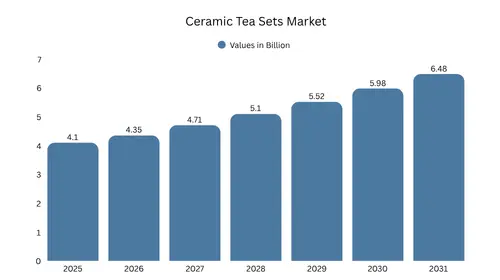
According to Zeal Market Research, the global ceramic tea sets market size was valued at USD 4.1 billion in 2025 and is projected to grow from USD 4.35 billion in 2026 to reach USD 6.48 billion by 2031, registering a CAGR of 8.3% during the forecast period (2026-2031). The market growth is primarily driven by rising consumer preference for artisanal and handcrafted homeware products, increasing adoption of premium tea-drinking culture, and the growing influence of aesthetic dining and home décor trends. Expanding café culture, rising gifting demand, and increasing consumer interest in sustainable and culturally inspired serveware are further supporting demand for ceramic tea sets globally.
Key Market Insights
- Asia Pacific accounted for the leading regional share of the global ceramic tea sets market at 38.4% in 2025, supported by strong tea consumption culture and established ceramic manufacturing clusters.
- By product type, the traditional tea sets segment dominated the market in 2025 with 42.7% of global revenue, equivalent to approximately USD 1.7 billion, driven by high demand for complete household serving collections.
- By material type, porcelain ceramics remained the dominant category owing to their premium appearance, durability, and strong association with formal tea-serving traditions.
- By distribution channel, online retail is expected to witness significant expansion as consumers increasingly purchase handcrafted and designer ceramic products through e-commerce platforms.
- The luxury and artisanal segment is projected to record the fastest growth during the forecast period, supported by rising demand for handcrafted and culturally inspired ceramic collections.
What are the growth opportunities in the ceramic tea sets market?
Expansion of Premium Tea Culture and Home Café Experiences
One of the major growth opportunities lies in the rapid expansion of premium tea consumption and home café culture globally. Consumers are increasingly recreating café-style beverage experiences within residential spaces, creating demand for aesthetically coordinated ceramic tea sets that enhance presentation and sensory appeal. Matcha rituals, herbal infusions, specialty loose-leaf tea consumption, and social tea gatherings are further supporting adoption across urban households.
The growing popularity of tea-focused wellness routines is also driving demand for premium ceramic serveware. Consumers increasingly associate ceramic tea sets with relaxation, mindfulness, and luxury dining experiences, particularly in metropolitan markets where wellness-oriented lifestyles continue expanding. Social media-driven food presentation trends and tablescaping culture are additionally encouraging consumers to invest in visually distinctive tea-serving products.
Luxury tea brands, boutique cafés, and hospitality operators are increasingly offering curated tea experiences paired with customized ceramic serveware. This is creating opportunities for ceramic manufacturers to collaborate with premium beverage companies and hospitality brands to develop co-branded collections and limited-edition tea-serving products.
Growth of Artisan and Handmade Ceramic Products
The increasing consumer preference for handcrafted and small-batch ceramic products presents a strong opportunity for artisan manufacturers and regional pottery clusters. Handmade ceramic tea sets featuring unique glazing patterns, textured finishes, and culturally inspired craftsmanship are increasingly viewed as premium lifestyle products rather than traditional utility items. This trend is particularly strong among millennials and Gen Z consumers seeking authenticity and sustainable consumption.
Consumers are increasingly valuing visible craftsmanship characteristics such as hand-thrown forms, natural clay textures, irregular glazing effects, and individually painted detailing. These features differentiate artisan ceramic products from mass-manufactured tableware and allow manufacturers to command premium pricing within luxury homeware markets.
The expansion of digital marketplaces and direct-to-consumer sales platforms is further improving global accessibility for independent ceramic studios and artisan cooperatives. Small manufacturers can now reach international consumers without relying heavily on traditional retail distribution channels, significantly improving export opportunities and niche brand visibility.
Designer Collaborations and Hospitality Integration
Boutique hotels, luxury cafés, premium restaurants, and wellness resorts are increasingly adopting customized ceramic tea sets to elevate dining experiences and strengthen visual branding. Collaborations between ceramic artists, hospitality brands, and interior designers are creating opportunities for limited-edition collections and premiumized serveware categories.
Hospitality operators increasingly view ceramic tea sets as an extension of customer experience and brand identity. Custom-designed teaware with region-specific aesthetics, handcrafted finishes, and signature presentation styles are helping hotels and cafés differentiate their dining environments within highly competitive hospitality markets.
The premium gifting segment also represents a growing opportunity within hospitality-driven demand. Luxury tea-serving collections packaged with specialty teas, wellness products, or artisanal accessories are increasingly being used for executive gifting, wedding gifting, and tourism-focused retail applications.
Regional Heritage and Cultural Craft Commercialization
Growing consumer interest in culturally rooted products is enabling manufacturers to commercialize tea sets inspired by Japanese, Chinese, Korean, Moroccan, and Indian tea-serving traditions. Governments and craft institutions are increasingly supporting heritage pottery preservation and artisan development programs, creating new export opportunities for region-specific ceramic collections.
Traditional ceramic styles such as celadon pottery, blue-and-white porcelain, terracotta serveware, and hand-painted regional ceramics are increasingly being integrated into modern lifestyle product categories. This is creating opportunities for ceramic manufacturers to combine historical craftsmanship techniques with contemporary aesthetics and functionality.
Cultural tourism and experiential retail are also contributing to demand growth for regionally inspired ceramic tea sets. Tourists increasingly purchase handcrafted ceramic products as premium souvenirs and collectible home décor items, supporting the commercialization of local pottery traditions across international markets.
Emergence of Functional Decorative Serveware
Ceramic tea sets are increasingly evolving beyond traditional beverage-serving products into multifunctional decorative homeware items. Modern consumers are purchasing tea sets as part of home décor, tablescaping, gifting, and wellness-oriented lifestyle experiences. This positions ceramic tea sets at the intersection of home décor, hospitality, wellness culture, and artisanal craftsmanship.
Interior design trends emphasizing natural materials, minimalist aesthetics, and earthy color palettes are increasing the decorative appeal of ceramic tea-serving products. Open shelving concepts and curated kitchen displays are further encouraging consumers to purchase visually distinctive tea sets that complement modern interior spaces.
The gifting segment is also expanding rapidly, with ceramic tea sets increasingly positioned as premium lifestyle gifts for weddings, festivals, housewarming occasions, and luxury corporate gifting applications. Manufacturers are responding through enhanced packaging design, personalized engraving options, and curated premium collections targeting affluent consumer groups.
Ceramic Tea Sets Market Trends
- Rise of slow living and mindful consumption: Consumers are increasingly purchasing ceramic tea sets as part of calming lifestyle rituals associated with mindfulness, wellness, and intentional living. Earth-toned ceramics, matte finishes, and handcrafted textures are gaining strong popularity. Minimalist tea-serving aesthetics inspired by Scandinavian and Japanese design philosophies are particularly influencing purchasing behavior among younger consumers.
- Growth of handmade and artisanal ceramics: Handmade pottery and small-batch ceramic collections are witnessing increased demand as consumers seek authenticity, craftsmanship, and non-mass-produced homeware products. Limited-edition ceramic collections and visibly handcrafted imperfections are increasingly viewed as indicators of product exclusivity and premium value.
- Cultural and heritage-inspired product design: Manufacturers are incorporating regional tea-serving aesthetics and traditional ceramic techniques into modern product collections to attract culturally conscious consumers. Hand-painted motifs, heritage glazing methods, and region-specific pottery styles are increasingly being commercialized for international home décor and gifting markets.
- Premiumization of tea-serving experiences: Ceramic tea sets are increasingly positioned as luxury lifestyle products within premium hospitality, gifting, and home décor markets. Consumers are showing greater willingness to invest in high-quality ceramic serveware associated with aesthetic dining experiences and curated social gatherings.
- E-commerce-driven artisan accessibility: Online marketplaces and social commerce platforms are enabling small ceramic studios and artisan workshops to reach global consumers directly. Video-based product storytelling, livestream selling, and social media-driven craft branding are significantly improving visibility for independent ceramic manufacturers.
- Sustainable and reusable serveware adoption: Consumers are increasingly preferring durable ceramic products over disposable serveware alternatives, supporting long-term demand for reusable tea-serving products. Sustainability-focused buyers are particularly attracted to handmade ceramics produced using natural materials and low-volume manufacturing methods.
- Growth of hospitality-focused customized ceramic collections: Hotels, tea lounges, boutique cafés, and wellness resorts are increasingly commissioning customized ceramic tea sets designed specifically for brand presentation and guest experience enhancement. This trend is supporting demand for premiumized and small-batch ceramic production.
- Expansion of multifunctional homeware positioning: Ceramic tea sets are increasingly marketed not only as serveware but also as decorative display products, collectible art pieces, and luxury gifting items. This multifunctional positioning is expanding consumer purchasing occasions beyond traditional tea consumption.
Segmental Insights
By Product Type
Based on product type, the ceramic tea sets industry is segmented into traditional tea sets, modern tea sets, travel tea sets, and decorative tea sets. The traditional tea sets segment led the ceramic tea sets market in 2025, accounting for 42.7% of global revenue, equivalent to approximately USD 1.7 billion, due to strong household adoption and gifting demand.
- Traditional tea sets: Includes classic teapots, cups, saucers, sugar bowls, and serving trays designed for formal tea-serving occasions. This segment benefits from strong cultural relevance and gifting applications. Demand remains particularly strong across Asia Pacific and Europe, where ceremonial tea-serving traditions continue influencing household purchasing patterns.
- Modern tea sets: Features minimalist and contemporary ceramic designs focused on urban consumers seeking aesthetic and multifunctional serveware products. Matte glazing, neutral color palettes, stackable designs, and Scandinavian-inspired styling are major product differentiation trends within this segment.
- Travel tea sets: Includes compact and portable tea-serving collections designed for outdoor use, travel, and premium gifting applications. Rising wellness tourism and outdoor lifestyle trends are supporting demand for lightweight and portable ceramic tea-serving solutions.
- Decorative tea sets: Covers artistically designed ceramic tea sets used primarily for home décor, luxury display, and collectible purposes. Limited-edition handcrafted collections and culturally themed ceramic art sets are increasingly gaining traction among premium consumers and collectors.
By Material Type
Based on material type, the global market for ceramic tea sets is segmented into porcelain ceramics, stoneware ceramics, bone china, and others, with porcelain ceramics dominating due to their premium appearance and durability.
- Porcelain ceramics: The leading segment owing to elegant aesthetics, lightweight structure, stain resistance, and premium positioning in formal tea-serving traditions. High durability and smooth finishing also make porcelain highly preferred across luxury hospitality and gifting applications.
- Stoneware ceramics: Known for rustic textures, durability, and handcrafted appeal. Widely used in artisanal and modern tea set collections. The growing popularity of earthy aesthetics and handmade pottery trends is significantly strengthening the segment demand.
- Bone china: Premium category valued for translucency, lightweight structure, and luxury presentation, particularly within upscale hospitality and gifting markets. Premium tea lounges and luxury hotels increasingly prefer bone china due to its refined appearance and high-end brand association.
- Others: Includes terracotta ceramics, earthenware, and mixed-material ceramic products used in region-specific and handcrafted tea-serving applications. These materials are particularly popular within heritage-inspired collections and culturally rooted ceramic craftsmanship.
By Distribution Channel
Based on distribution channel, the market is segmented into online retail, specialty homeware stores, supermarkets & hypermarkets, and others, with online retail emerging as the fastest-growing segment.
- Online retail: Driven by expanding e-commerce platforms, artisan marketplaces, social commerce channels, and direct-to-consumer ceramic brands. Detailed visual product presentation and global shipping capabilities are significantly expanding consumer access to handcrafted ceramic products.
- Specialty homeware stores: Provide curated premium collections and personalized shopping experiences for consumers seeking designer ceramic products. These stores remain highly important for luxury positioning and experiential retail engagement.
- Supermarkets & hypermarkets: Cater primarily to mass-market consumers purchasing affordable and standardized tea-serving products. Value-driven ceramic collections and seasonal gifting promotions continue supporting segment demand.
- Others: Includes handicraft exhibitions, pottery studios, souvenir stores, and hospitality procurement channels. Artisan fairs and tourism-oriented retail remain important sales channels for regional ceramic producers and independent pottery workshops.
By End Use
Based on end use, the market is segmented into residential, hospitality, commercial gifting, and others, with the residential segment accounting for the largest market share.
- Residential: The dominant segment driven by rising home décor spending, premium tea consumption, and aesthetic dining preferences. Increasing consumer interest in curated dining spaces and social hosting culture is further strengthening household demand.
- Hospitality: Includes hotels, cafés, tea lounges, and wellness resorts increasingly using premium ceramic tea sets to enhance customer experience. Customized ceramic serveware is becoming an important branding element within luxury hospitality environments.
- Commercial gifting: A growing segment supported by corporate gifting, festive gifting traditions, and luxury packaging innovations. Premium ceramic tea set collections paired with specialty teas are increasingly used for executive and seasonal gifting applications.
- Others: Includes ceremonial use, collectible ceramics, and cultural tea-serving applications. Religious ceremonies, cultural events, and heritage tourism activities continue to support niche market demand.
| By Product Type | By Material Type | By Distribution Channel | By End Use |
|---|---|---|---|
|
|
|
|
Regional Insights
Asia Pacific
Asia Pacific accounted for 38.4% of the global ceramic tea sets market share in 2025, making it the leading regional market.
- China, Japan, and India dominate the regional market due to strong tea consumption traditions and well-established ceramic manufacturing industries.
- Regional demand is supported by rising premium homeware spending, an expanding middle-class population, and the strong cultural relevance of tea-serving rituals.
- Artisan pottery clusters and export-oriented ceramic industries further strengthen regional production capabilities.
- Japan and China continue leading the premium ceramic tea-serving segment through globally recognized porcelain and handcrafted pottery traditions.
- Rapid urbanization and expanding café culture across Southeast Asia are further contributing to the rising demand for modern ceramic serveware products.
North America
North America ceramic tea sets market was valued at USD 1.0 billion in 2025 and is expected to grow steadily through 2031.
- Growth is driven by increasing demand for artisanal home décor products and rising adoption of the premium tea-drinking culture.
- Consumers increasingly prefer handcrafted and sustainable ceramic products aligned with slow-living and wellness-oriented lifestyles.
- Luxury gifting and boutique hospitality applications continue supporting premium market expansion.
- Independent ceramic studios and online artisan marketplaces are gaining strong traction across the United States and Canada.
- Rising consumer interest in wellness beverages including herbal tea, matcha, and functional infusions is supporting long-term demand for premium tea-serving products.
Europe
Europe represents a mature but steadily growing market for ceramic tea sets.
- Countries such as the UK, Germany, France, and Italy show strong demand for designer and handcrafted ceramic collections.
- Sustainability, cultural craftsmanship, and premium dining aesthetics remain key purchasing drivers.
- Hospitality modernization and growing café culture further support product adoption.
- European consumers show a strong preference for ethically sourced and environmentally sustainable ceramic products.
- Luxury tea-serving traditions and premium gifting culture continue supporting demand for bone china and high-end porcelain tea sets.
LATAM
Latin America and the Middle East are emerging as high-potential regional markets.
- Growing tourism and rising consumer spending on premium homeware are supporting ceramic tea set demand.
- Regional ceramic artistry and culturally inspired handcrafted products are increasingly gaining international recognition.
- Hospitality expansion and luxury tourism investments are creating demand for customized ceramic serveware products.
- Traditional handcrafted pottery industries across Morocco, Mexico, and parts of South America continue supporting regional artisanal ceramic production.
Ceramic Tea Sets Market Share
- The market remains moderately fragmented with a mix of multinational ceramic brands, artisan pottery studios, and regional handcrafted manufacturers operating globally.
- Established companies leverage large-scale manufacturing, global retail distribution, and premium branding strategies to maintain market leadership.
- Small and medium artisan producers are increasingly gaining traction through e-commerce platforms and social media-driven direct-to-consumer sales models.
- Product differentiation through handcrafted aesthetics, cultural storytelling, and limited-edition collections remains a key competitive strategy.
Leading Companies in the Ceramic Tea Sets Industry
- Wedgwood
- Royal Doulton
- Lenox Corporation
- Noritake Co., Limited
- Villeroy & Boch AG
- Portmeirion Group PLC
- Fiskars Group
- Churchill China PLC
- Rosenthal GmbH
- Corelle Brands
- Denby Pottery Company
- Vista Alegre
- Tokyo Design Studio
- Royal Albert
- Spode
- Wedgwood continues to maintain strong brand recognition through premium ceramic craftsmanship, luxury positioning, and heritage-inspired tea-serving collections.
- Noritake Co., Limited focuses on premium porcelain tea sets combining traditional Japanese ceramic artistry with modern product aesthetics.
- Villeroy & Boch AG emphasizes luxury dining and home décor integration through premium ceramic collections targeting high-income consumers and hospitality clients.
- Churchill China PLC maintains a strong presence in hospitality and commercial ceramic serveware through durable and aesthetically designed tea-serving products.
Ceramic Tea Sets Market News:
- In April 2026, Prada Home launched a limited-edition handcrafted ceramic tea and tableware collection during Milan Design Week under the “Chawan Cabinet” exhibition. The collection featured traditional Japanese ceramic artists and focused on ritual-based tea experiences, reflecting the growing luxury positioning of artisanal ceramic tea sets within premium home décor and hospitality markets.
- In April 2025, Loewe unveiled a global exhibition of artist-designed ceramic teapots and tea sets during Milan Design Week 2025. The project involved 25 international artists and designers exploring handcrafted porcelain and ceramic tea-serving concepts inspired by Japanese, Chinese, and Korean tea rituals.
Frequently Asked Questions
How big is the global ceramic tea sets market?
According to Zeal Market Research, the global ceramic tea sets market was valued at USD 4.1 billion in 2025 and is projected to increase from USD 4.35 billion in 2026 to reach USD 6.48 billion by 2031, registering a CAGR of 8.3% during the forecast period (2026-2031).
What is driving growth in the global market?
Growth is primarily driven by rising premium tea consumption, increasing demand for handcrafted homeware products, expanding café culture, growing interest in wellness-oriented lifestyles, and rising consumer preference for aesthetic dining experiences.
Which products are most popular in the global market?
Popular products include traditional porcelain tea sets, handcrafted stoneware collections, decorative ceramic teapots, travel tea sets, and premium gifting tea-serving collections designed for modern and luxury households.
Which regions are leading the global market?
Asia Pacific leads the market due to strong tea culture, established ceramic manufacturing industries, and growing premium homeware demand, while North America and Europe continue witnessing steady growth driven by artisanal and luxury ceramic trends.
Who are the leading players in the ceramic tea sets market?
Leading companies operating in the ceramic tea sets market include Wedgwood, Royal Doulton, Noritake Co., Limited, Villeroy & Boch AG, Portmeirion Group PLC, Churchill China PLC, and Lenox Corporation.